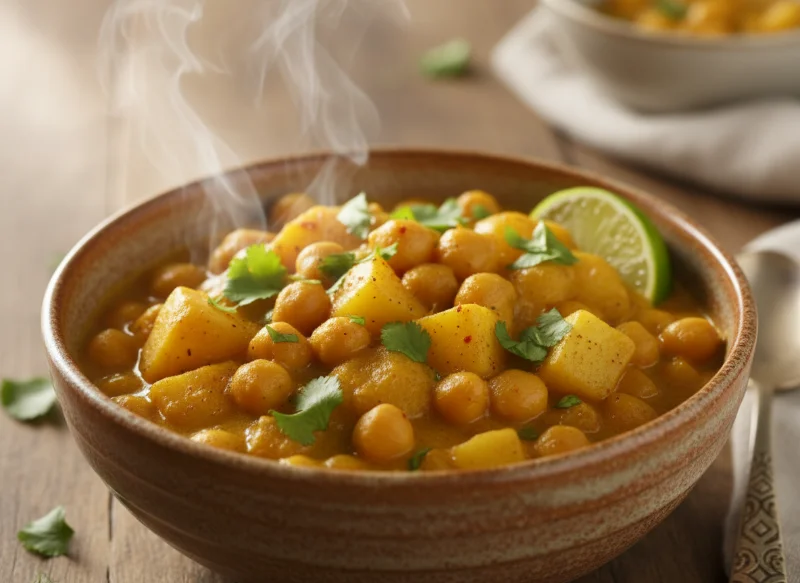
Time: 15 Minutes | Yield: 3-4 Servings
The landscape of home-cooked comfort is undergoing a radical shift in early 2026. As we prioritize metabolic efficiency and cognitive focus, we are moving away from the long-simmered, heavy stews of the past. Instead, we are embracing “Starch-Suspension”—a philosophy that focuses on the rapid hydration and mechanical release of starches from whole vegetables. At quickveganrecipe.com, we believe that your dinner should be a “functional reset”—a meal that provides deep, soul-warming satisfaction in the time it takes to boil water.
This 15-Minute One-Pot Chickpea & Potato Curry is the definitive expression of this trend. It belongs on your Quick Weeknight Dinners board because it utilizes the “Micro-Dice” method, allowing the potatoes to reach a “Butter-Soft” consistency in under fifteen minutes. By utilizing the “Turmeric-Bloom” technique, you ensure that the anti-inflammatory compounds are fully activated, supporting your high-performance lifestyle and keeping your energy levels stable.
The Science of the “Starch-Suspension” Technique
How do we achieve a thick, restaurant-quality curry in fifteen minutes? It comes down to surface-area physics and the Thermal-Saturation rule. In the modern kitchen, we prioritize “Molecular-Thickening”:
- The Micro-Dice Cut: We don’t use large potato chunks. Instead, we dice the potatoes into 1/2-inch (approx. 1 cm) cubes. This massive increase in surface area allows the boiling broth to penetrate the core of the potato almost immediately.
- The Starch-Suspension Pulse: As the micro-cubes cook, they release amylopectin starches into the liquid. This is the Starch-Suspension moment—the potatoes naturally thicken the curry base into a glossy “Golden-Cream” without the need for flour, cornstarch, or heavy creams.
- The Turmeric-Bloom: We sauté the spices in a small amount of oil before adding the liquid. This “blooms” the fat-soluble aromatics and activates the curcumin in the turmeric, ensuring the flavor is structurally integrated into the potatoes.
Why This Curry is a 2026 Nutritional Powerhouse
We focus on “Satisfying Strength”—the idea that our quick meals should provide the structural building blocks for physical resilience and cognitive focus.
- High-Density Plant Protein: Chickpeas are a nutritional titan, offering a complete amino-acid profile and essential iron. In 2026, we view them as a “performance legume” that supports muscle repair and sustained energy.
- Potassium and Electrolyte Balance: Potatoes are one of the most potassium-rich foods available. This mineral is critical for nerve function and muscle recovery, making this curry an ideal “Recovery Fuel” after a long day.
- Anti-Inflammatory “Golden-Shield”: The combination of turmeric and fresh ginger provides a potent anti-inflammatory shield. These spices support joint health and provide a natural “warmth” that centers the nervous system during the spring transition.
- Fiber-Rich Satiety: Unlike refined meat alternatives, whole legumes and tubers provide a dense source of soluble and insoluble fiber. This ensures a slow, steady release of energy, preventing the “after-dinner crash.”
Ingredients & Substitutions Guide
- 2 Medium Potatoes: Peeled and “Micro-Diced” into 1/2-inch cubes. (Yukon Gold works best for the “Butter-Soft” texture).
- 1 Can (15 oz) Chickpeas: Drained and rinsed thoroughly.
- 1 tbsp Yellow Curry Powder: For the “Aromatic Bloom” foundation.
- 1 tbsp Fresh Ginger: Grated for a zesty, metabolic lift.
- 2 Cloves Garlic: Minced finely.
- 1 Can (14 oz) Coconut Milk: For the “Silk-Emulsion” finish.
- 1/2 Cup Vegetable Broth: To facilitate the rapid hydration.
- 1 tbsp Fresh Lime Juice: The essential “Acid-Flash” reset.
- Fresh Cilantro: For the “Living Layer” garnish.
- Salt & Black Pepper: To taste.
Step-by-Step Instructions
1. The Aromatic Bloom (Step 1 of 5): Heat a teaspoon of coconut oil in a large skillet over medium-high heat. Add the minced garlic, grated ginger, and curry powder. Sauté for 60 seconds until the spices are bubbling and fragrant.
2. The Micro-Dice Integration (Step 2 of 5): Add the “Micro-Diced” potatoes and chickpeas to the pan. Toss vigorously for 2 minutes. The heat will begin to caramelize the surface starches of the potato.
3. The Thermal-Saturation (Step 3 of 5): Pour in the coconut milk and vegetable broth. Increase the heat to bring it to a rapid boil, then reduce the heat to medium. Simmer for 10–12 minutes until the potatoes are fork-tender.
4. The Starch-Suspension Finish (Step 4 of 5): Use your spoon to gently mash a few of the potato cubes against the side of the pan. This will release more starch and thicken the curry into a glossy, velvety cream.
5. The Final Acid-Flash (Step 5 of 5): Turn off the heat. Stir in the fresh lime juice. This “Acid-Flash” instantly lifts the heavy coconut fats and makes the golden spices pop.
6. Serve: Divide into bowls and garnish with a heavy shower of fresh cilantro. Serve immediately while the “Starch-Suspension” is at its peak silkiness.
Expert Tips for Success
The key to a restaurant-quality 15-minute curry is Geometry. If your potato cubes are too large, they will remain firm; keep them small and uniform! If the curry looks too “tight” (thick) after the simmer, add an extra splash of broth right before serving. For a high-performance boost, serve this curry with a side of steamed greens or over a bed of fluffy quinoa.


