Time: 15 Minutes | Yield: 2 Servings
In the early months of 2026, we are witnessing the rise of “Micro-Assembly.” This movement acknowledges that in a high-performance lifestyle, the goal isn’t always to cook from scratch, but to curate high-quality, nutrient-dense components into a single, cohesive experience. At our kitchen, we view the Mezze Bowl as the pinnacle of this trend. It is a dish that relies on the strategic “stacking” of flavors—briny, creamy, zesty, and crunchy—to satisfy the palate without requiring a single moment over a hot stove.
This 15-Minute Mediterranean Mezze Bowl is designed for the modern workday. It belongs on your Quick Vegan Lunches board because it provides a “Living Layer” of raw vegetables paired with the dense protein of chickpeas and falafel. By utilizing the “Hummus-Base” technique, we create a foundation that anchors the lighter ingredients, ensuring a meal that is physically satisfying and mentally revitalizing.
The Science of “Phytonutrient Stacking”
Why does a mezze bowl feel so much more energizing than a standard salad? It comes down to the diversity of the plant profiles. In 2026, we follow the “Rainbow-Density” rule:
- The Hummus Anchor: Hummus is more than a dip; it’s a source of healthy fats and complex carbohydrates. By using it as the base “scoop” of the bowl, you provide a slow-release energy source that prevents the mid-afternoon sugar crash.
- The Enzyme Boost: By incorporating raw cucumbers, tomatoes, and fresh parsley (tabbouleh-style), we are introducing “living” enzymes to the gut. These enzymes assist in the breakdown of the denser proteins in the falafel, improving digestion and nutrient absorption.
- The Briny Contrast: Olives and pickled peppers provide a hit of fermented-style acidity. This acidity stimulates the production of digestive juices, making the meal feel lighter even as it provides significant satiety.
Why This Bowl is a 2026 Nutritional Powerhouse
At our kitchen, we focus on “Clean-Fuel Efficiency”—the idea that our food should serve as both a treat and a functional tool for wellness.
- High-Density Plant Protein: Between the chickpeas in the hummus and the broad-bean or chickpea base of the falafel, this bowl is a protein champion. It supports muscle maintenance and recovery, making it an ideal post-workout lunch.
- Heart-Healthy Monounsaturated Fats: Extra virgin olive oil and tahini (sesame paste) provide the monounsaturated fats essential for cardiovascular health. These fats also act as a carrier for the fat-soluble vitamins found in the fresh vegetables.
- Hydration Density: The raw components of this bowl are high in “Structured Water”—the hydration naturally found in plant cells. This provides a more efficient form of hydration than plain water, keeping your focus sharp through the rest of your day.
Ingredients & Substitutions Guide
- 1 Cup Classic Hummus: (Store-bought or pre-batched).
- 6-8 Prepared Falafel: (Look for high-quality, refrigerated versions that just need a 2-minute warm-up).
- 1 Cup Cucumber: Diced small.
- 1 Cup Cherry Tomatoes: Halved.
- 1/4 Cup Kalamata Olives: Pitted.
- 1/4 Cup Vegan Tzatziki: (Made with soy or almond yogurt).
- 1/2 Fresh Lemon: For the final “acid-lift.”
- 1 tsp Dried Oregano & Fresh Parsley: To build the herbal profile.
- 2 Whole-Grain Pitas: Toasted and cut into triangles.
Step-by-Step Instructions
1. The Warm-Up (Step 1 of 5): Place your prepared falafel and pita bread in a toaster oven or air fryer for 3–5 minutes at 350°F (175°C). This provides the “warm” element that makes the bowl feel like a restaurant meal.
2. The Quick Tabbouleh (Step 2 of 5): In a small bowl, toss the diced cucumbers and tomatoes with the dried oregano, a squeeze of lemon juice, and a pinch of sea salt. Let them sit for 2 minutes to release their juices.
3. The Hummus Foundation (Step 3 of 5): Take two large bowls. Place two generous scoops of hummus on one side of each bowl. Use the back of your spoon to create a small “well” in the center of the hummus.
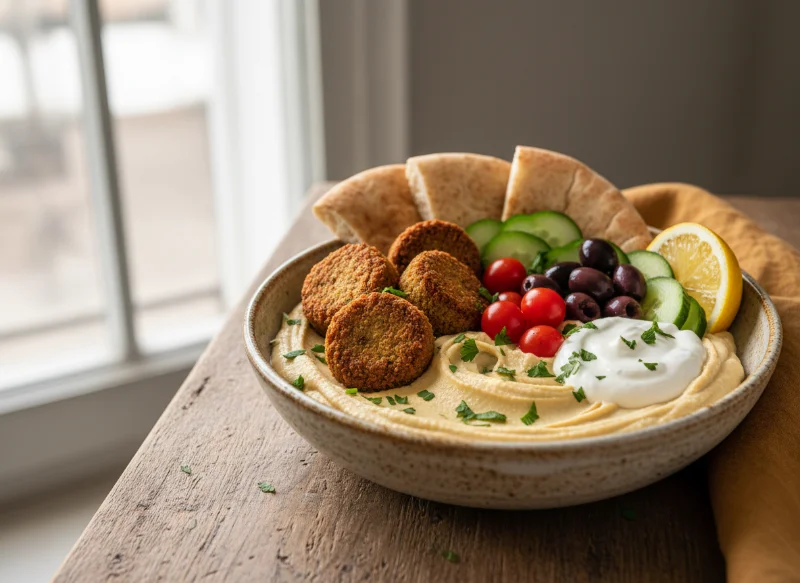
4. The Component Stack (Step 4 of 5): Add the warmed falafel next to the hummus. Fill the remaining space with the cucumber-tomato mix and the kalamata olives.
5. The Final Garnish (Step 5 of 5): Add a dollop of vegan tzatziki in the center. Shower the entire bowl with fresh parsley and a final drizzle of extra virgin olive oil.
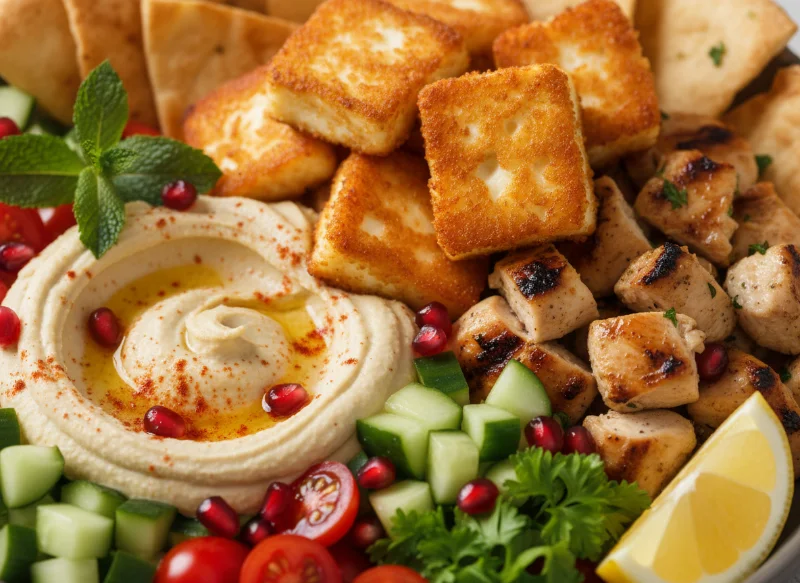
6. Serve: Tuck the warm pita triangles into the side of the bowl. Serve immediately to enjoy the contrast between the warm falafel and the ice-cold vegetables.
Expert Tips for Success
- The “Double-Dip” Hack: If your hummus is a bit plain, stir in a teaspoon of za’atar or smoked paprika before plating to give it a 2026 flavor upgrade.
- Texture Control: If you want extra crunch, add a tablespoon of toasted pine nuts or sunflower seeds to the top of the bowl.
- The Bread Alternative: If you are avoiding gluten, swap the pita for a scoop of chilled quinoa or a handful of high-quality seed crackers.
- Storage: This is a Vegan Meal Prep for Beginners favorite. Store the hummus, falafel, and veggies in a divided container. Keep the pita separate to ensure it stays soft. It’s the ultimate “grab-and-go” 2026 lunch!
Conclusion
You don’t need a complicated recipe or a long list of instructions to enjoy a vibrant, protein-packed Mediterranean feast. This 15-Minute Mediterranean Mezze Bowl proves that with a few smart techniques—like “Micro-Assembly” and “Phytonutrient Stacking”—you can create a plant-based masterpiece that nourishes your body and satisfies your soul.
Is this zesty, colorful bowl going to be your new go-to lunch? Let us know in the comments—do you prefer extra hummus or extra falafel? Don’t forget to save this pin to your Quick Vegan Lunches board for your next 15-minute miracle!