Prep Time: 5 mins | Cook Time: 10 mins | Total Time: 15 mins | Yield: 2 servings
In the modern world of plant-based culinary arts, we are seeing a fascinating shift toward what experts call “Whole-Food Mimicry.” This movement focuses on using the natural cellular structures of vegetables to replicate the refined, decadent experiences of premium animal proteins. One of the most successful examples of this is the transformation of the eggplant into “Unagi,” the prized freshwater eel of Japanese cuisine. Traditionally, unagi is celebrated for its rich, fatty mouthfeel and its ability to absorb a sweet and salty glaze.
This Miso-Glazed Eggplant “Unagi” is a definitive recipe for this trend. It solves the biggest hurdle of vegan Japanese cooking: achieving that specific “flaky-yet-firm” texture without the long wait. By utilizing a high-speed “Steam-Sear” technique, you can create a centerpiece for a sushi bowl or a donburi in exactly fifteen minutes. It’s a sustainable, healthy, and incredibly flavorful way to enjoy the deep umami of the East.
The Science of the “Diamond Score”
Replicating unagi requires more than just flavor; it requires the right visual and textural cues. Traditional eel has a distinct pattern of small ridges and a soft, fatty interior that flakes away when pressed with a chopstick.
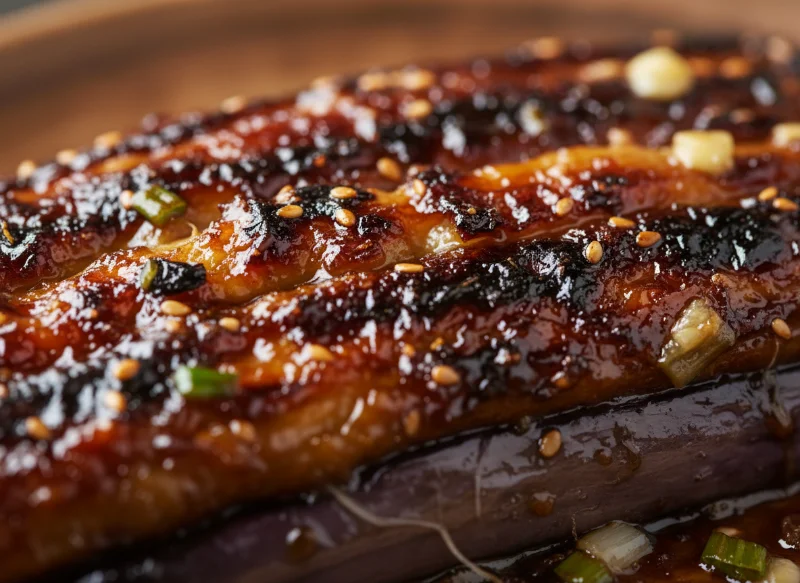
- The Scoring Secret: By cutting a deep diamond pattern (known as Hishigata) into the flesh of the eggplant, we do two things. First, we increase the surface area for the glaze to penetrate deep into the vegetable. Second, we allow the heat to reach the core faster, which breaks down the eggplant’s spongy cell walls into a buttery, melt-in-your-mouth consistency.
- The Steam-Sear Method: Eggplant is a sponge. If you just fry it, it absorbs too much oil. If you just steam it, it becomes mushy. Our 15-minute method involves searing the eggplant face-down to create a charred crust, then adding a splash of water and covering the pan for 2 minutes to “flash-steam” the interior. This results in an eggplant fillet that is structurally sound but incredibly tender.
- Miso Emulsification: Unlike standard teriyaki, which is thin, we use a miso-based glaze. The fermented proteins in the miso act as a natural thickener, creating a rich, lacquer-like coating that mimics the fatty skin of grilled fish.
Why This Recipe is a Modern Wellness Hero
Choosing a plant-based eel alternative isn’t just about environmental sustainability; it’s about providing your body with high-density nutrients without the heavy saturated fats.
- Antioxidant Powerhouse: Eggplants are rich in anthocyanins, specifically nasunin, which is found in the skin. This powerful antioxidant is known for protecting cell membranes, especially in the brain.
- Fiber for Satiety: Unlike traditional proteins, eggplant is packed with dietary fiber. This supports a healthy gut microbiome and ensures that your sushi bowl keeps you feeling full and energized for hours.
- Low-Glycemic Umami: We balance our glaze with a touch of maple syrup and mirin, but the high fiber content of the eggplant ensures a slow release of energy, preventing the blood sugar spikes often associated with sugary restaurant sauces.
Ingredients & Substitutions Guide
- 1 Large Long Eggplant: (Chinese or Japanese varieties work best as they have thinner skins and fewer seeds).
- 1 tbsp White Miso Paste: Substitution: Yellow miso works well; avoid dark red miso as it may overpower the delicate eggplant.
- 1 tbsp Soy Sauce or Tamari: For that essential salty backbone.
- 1 tbsp Mirin: This is a sweet Japanese rice wine. Substitution: If you don’t have it, use 1 tsp maple syrup mixed with 1 tsp rice vinegar.
- 1 tsp Toasted Sesame Oil: For a nutty, aromatic sear.
- 1 tsp Grated Ginger: To add a “bright” heat to the glaze.
- Garnish: Toasted sesame seeds and sliced scallions.
Step-by-Step Instructions
1. The Precision Prep (Step 1 of 5): Wash the eggplant and slice it in half lengthwise. Using a sharp knife, score a diamond pattern into the flesh, being careful not to cut through the skin. This should take about 60 seconds per half.
2. The High-Heat Sear (Step 2 of 5): Heat the sesame oil in a large non-stick skillet over medium-high heat. Place the eggplant halves face-down. Sauté for 3–4 minutes until the diamond edges are dark golden brown and slightly charred.
3. The Flash-Steam (Step 3 of 5): Add 2 tablespoons of water to the pan and immediately cover with a lid. Let it steam for 3 minutes. This will soften the interior of the eggplant, giving it that “eel-like” buttery texture.
4. The Glaze Infusion (Step 4 of 5): While the eggplant steams, whisk together the miso, soy sauce, mirin, and grated ginger in a small bowl. Remove the lid from the pan and flip the eggplant so the skin side is down.
5. The Final Lacquer (Step 5 of 5): Brush the miso mixture generously over the scored side of the eggplant. Cook for another 2 minutes, allowing the glaze to bubble and seep into the diamond cuts. The sauce will reduce into a thick, glossy lacquer.
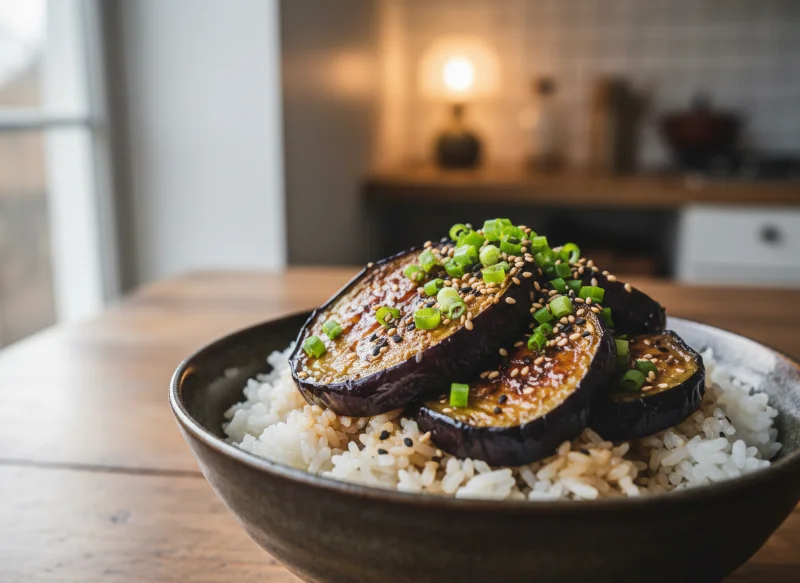
6. Serve: Place the “Unagi” over a bowl of warm rice. Top with sesame seeds and scallions. Serve with a side of sliced cucumber or avocado for a fresh contrast.
Expert Tips for Success
- The Knife Depth: When scoring, aim to cut about 3/4 of the way through the flesh. If you cut too shallow, the glaze won’t penetrate; if you cut too deep, the fillet will fall apart in the pan.
- Salt the Eggplant: If you have an extra 2 minutes, sprinkle the raw scored eggplant with a pinch of salt and let it sit while you prep the sauce. This draws out any potential bitterness and seasons it from the inside out.
- Use the Right Miso: White miso is younger and sweeter, which is the traditional choice for glazing vegetables. It provides a creamy, “buttery” flavor that red miso lacks.
- Storage: This is best enjoyed immediately to maintain the contrast between the charred edges and the soft center. However, it makes a phenomenal addition to cold bento boxes the next day.
Conclusion
You don’t need to visit a high-end sushi bar to enjoy the complex, savory-sweet flavors of Japanese cuisine. This 15-Minute Miso-Glazed Eggplant “Unagi” proves that with a few smart techniques—like the diamond score and the steam-sear method—you can create a gourmet masterpiece that honors traditional textures while remaining 100% plant-based. It is a fast, healthy, and undeniably elegant way to fuel your plant-based journey.
Is this silky, umami-packed eggplant going to be your next dinner showstopper? Let us know in the comments—do you prefer yours in a bowl or a roll? Don’t forget to save this pin to your 30-Minute Vegan Dinners board for your next 15-minute miracle!