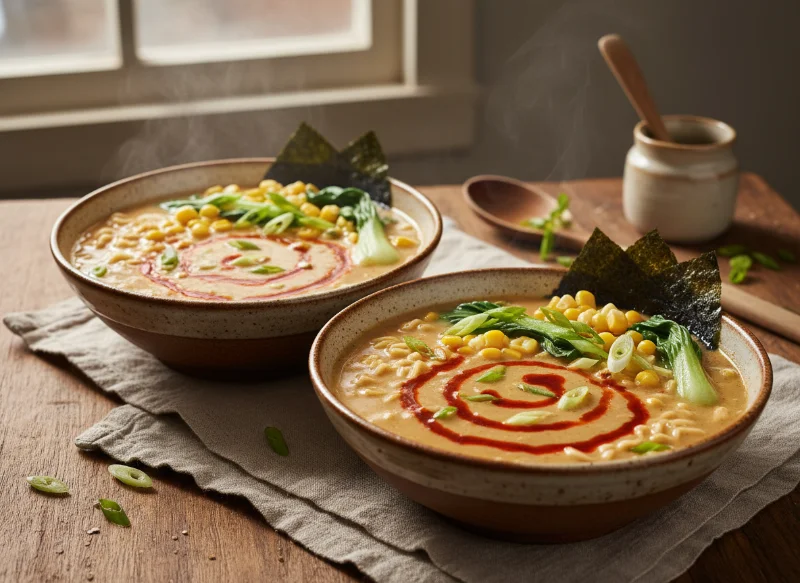
Time: 15 Minutes | Yield: 2 Servings
As we move through the early months of 2026, the plant-based culinary world has reached a consensus: the days of simmering vegetable scraps for twelve hours to get a decent broth are officially over. The “Liquid Gold” movement has taken over, prioritizing high-impact, fermented fats to create “Instant Tonkotsu.” At our virtual kitchen, we’ve perfected the balance of two specific pantry titans—tahini and miso—to create a ramen broth so decadent you’ll forget it was made in a single pot.
This Creamy Miso-Tahini Ramen is the ultimate representation of 2026’s “Maximalist Pantry” trend. It relies on the physics of emulsion rather than the endurance of boiling bones. By combining the stone-ground silkiness of tahini with the fermented complexity of miso, we achieve a mouthfeel that is remarkably similar to traditional pork-based broths, but with a profile that is entirely clean, plant-based, and ready in the time it takes to boil a kettle.
The Science of the “No-Simmer” Emulsion
The core of a great ramen is the “tare” (the seasoning base) and the “fat” (which provides the body). In this 15-minute version, we use the Whisk-in-Bowl method to create an instant emulsion that doesn’t separate.
- The Tahini-Miso Bind: Tahini is essentially sesame oil and fiber ground into a paste. When you whisk it with miso, you’re creating a concentrated block of flavor. As you slowly add hot noodle water (rich in starch), the tahini and miso emulsify, trapping tiny droplets of sesame oil within the liquid. This creates that opaque, “creamy” appearance without a drop of dairy.
- The Starch Catalyst: Just as we do with our pasta recipes, the water used to boil the ramen noodles is our secret weapon. The starch released by the noodles acts as a stabilizer, ensuring the tahini doesn’t “break” or become grainy.
- Preserving the Probiotics: Traditional miso soup is often boiled, which kills the beneficial bacteria. By whisking our miso into the bowl with slightly cooled water at the very end, we preserve more of the probiotic benefits of the fermentation, making this ramen a win for your gut health as well as your taste buds.
Why This Ramen is a 2026 Nutritional Powerhouse
At our kitchen, we focus on “Functional Comfort”—dishes that satisfy the soul while providing the high-density nutrition required for a modern lifestyle.
- Healthy Fats for Brain Health: Tahini is one of the best plant-based sources of healthy fats and minerals like phosphorus and manganese. These fats are essential for sustained energy and cognitive function, making this the perfect “late-night study” or “busy workday” meal.
- Gut-Friendly Umami: Miso is a fermented powerhouse. Even in a quick 15-minute cook, the enzymes and fermented soy protein support healthy digestion and provide a complex array of B vitamins.
- Clean Protein: Between the tahini and the noodles (especially if you choose a whole-grain or chickpea-based ramen), you are getting a satisfying hit of plant-based protein without the inflammatory markers often found in processed meat broths.
Ingredients & Substitutions Guide
- 2 Packs Vegan Ramen Noodles: (Discard the spice packets—we’re making our own!).
- 1 tbsp White Miso Paste: Substitution: Yellow miso works well; avoid dark red miso as it can make the broth too salty and brown.
- 1 tbsp Runny Tahini: Ensure it’s well-mixed and not from the dry bottom of the jar.
- 2 Cups Boiling Water: Or use the starch-heavy water directly from the noodle pot.
- 1 tbsp Soy Sauce: For that essential savory depth.
- 1 tsp Grated Ginger & 1 Clove Garlic: For a “bright” aromatic base.
- Toppings: Fresh scallions, canned corn, nori sheets, and a heavy drizzle of chili oil.
- Optional: Baby bok choy or spinach (toss these into the boiling water for the last 60 seconds).
Step-by-Step Instructions
1. The Noodle Boil (Step 1 of 5): Bring a pot of water to a boil. Add your ramen noodles and any hardy greens (like bok choy). Cook for 3–4 minutes or according to the package instructions. Crucial: Just before draining, scoop out 2 cups of the hot noodle water.
2. The Tare Prep (Step 2 of 5): While the noodles boil, take two large serving bowls. In each bowl, place 1/2 tablespoon of miso, 1/2 tablespoon of tahini, 1/2 tablespoon of soy sauce, and half of the minced garlic and ginger. Mash them together with a spoon into a thick paste at the bottom of the bowl.
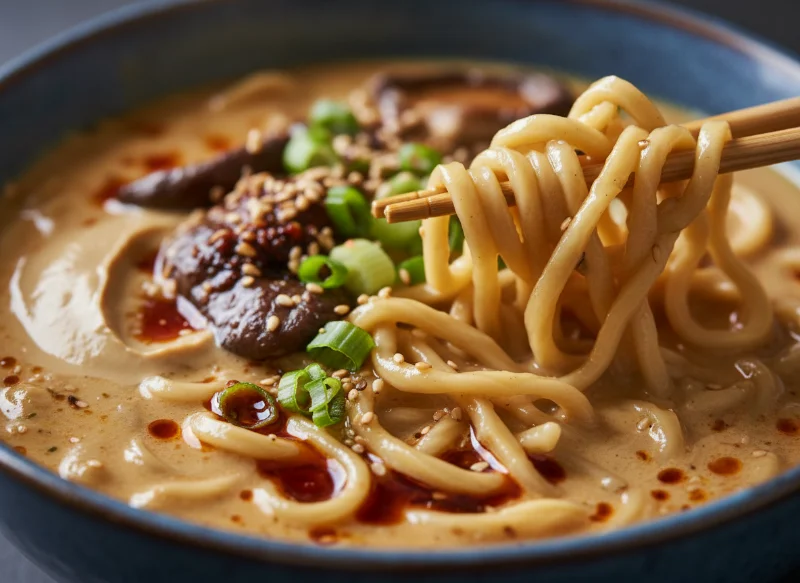
3. The Instant Emulsion (Step 3 of 5): Slowly pour 1 cup of the hot noodle water into each bowl. Whisk vigorously with a fork or a small whisk until the paste fully dissolves and the water turns into a creamy, pale tan broth.
4. The Assemble (Step 4 of 5): Drain the noodles and divide them between the two bowls of broth. Use your chopsticks to lift the noodles and let them settle into the liquid, ensuring they are fully coated.
5. The Final Garnish (Step 5 of 5): Top each bowl with your scallions, corn, and a sheet of nori tucked into the side. Finish with a generous drizzle of chili oil—the red oil on the creamy tan broth is the signature look of 2026 ramen.
Expert Tips for Success
- Whisking Technique: To get the smoothest broth, add the hot water just a tablespoon at a time for the first few seconds, stirring until a smooth “slurry” forms, then pour in the rest.
- The Tahini Choice: Use a Mediterranean-style tahini (the runny kind) rather than a thick, artisanal one. It emulsifies much faster in hot water.
- Heat Management: If you prefer your ramen piping hot, make sure your bowls are warmed beforehand. The creamy broth cools down faster than clear broths because of the density of the tahini.
- Storage: Ramen is notoriously poor for storage as the noodles absorb the broth. If you’re meal prepping, store the “tare” (miso-tahini-soy-garlic-ginger paste) in a small container and just add hot water and fresh noodles when you’re ready to eat.
Conclusion
You don’t need a professional ramen kitchen or a dozen hours to enjoy a bowl of authentic-tasting tonkotsu-style ramen. This 15-Minute Creamy Miso-Tahini Ramen proves that with a few smart techniques—like the starch-tahini emulsion—you can create a vibrant, plant-based masterpiece that nourishes your body and satisfies your soul. It is a fast, healthy, and undeniably addictive way to fuel your plant-based journey.
Is this silky, umami-packed ramen going to be your new go-to comfort meal? Let us know in the comments—do you like yours extra spicy or with a side of extra corn? Don’t forget to save this pin to your Quick Weeknight Dinners board for your next 15-minute miracle!