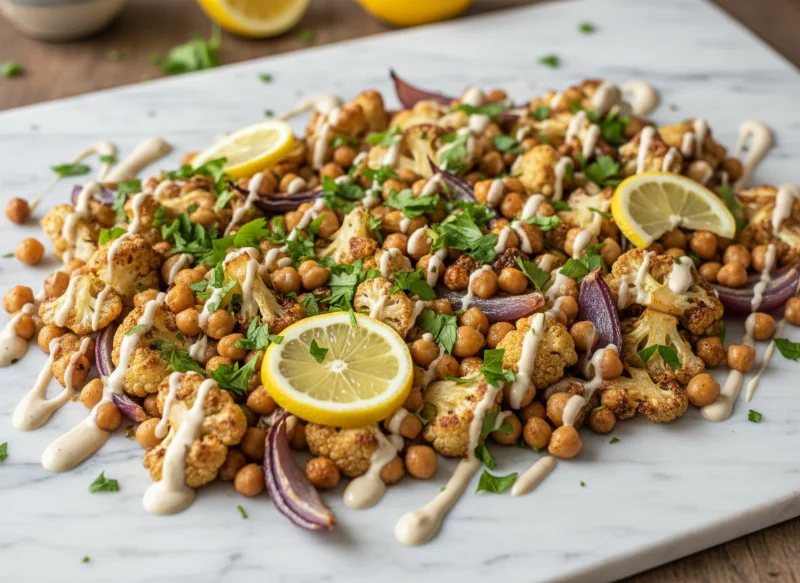
As we transition into the high-energy months of the Solar-Bio-Vibrancy season, the culinary focus at quickveganrecipe.com has pivoted toward “Thermal-Flash” roasting. We are moving away from the long, slow-roasting methods of winter that tend to dehydrate summer produce and heat up our living spaces. Instead, we are embracing high-intensity, short-duration dry heat to achieve a sophisticated “Cruciferous-Char” that maintains the vegetable’s internal moisture while maximizing its umami profile.
The Sheet Pan Mediterranean Cauliflower & Chickpeas is the definitive expression of this movement. Designed for the One-Pot & Sheet Pan Dinners board, this recipe solves the classic “Soggy-Crucifer” dilemma that plagues many amateur vegan kitchens. By utilizing the physics of surface-area-to-volume ratios and the chemical triggers of the Maillard reaction, we create a meal that provides a “Total-Protein-Lock” and deep sensory satisfaction in exactly thirty minutes.
The Science of “Cruciferous-Char” and Maillard Synthesis
One of the primary goals of 2026 performance nutrition is the preservation of heat-sensitive compounds like sulforaphane. To understand why “Thermal-Flash” roasting is superior, we must look at the biochemistry of the cauliflower. Cauliflower contains glucoraphanin and an enzyme called myrosinase. When the vegetable is cut (increasing surface area) and exposed to a rapid burst of heat, these components react to form sulforaphane:
$$\text{Glucoraphanin} + \text{Myrosinase} \xrightarrow{\Delta} \text{Sulforaphane}$$
However, if cauliflower is steamed or boiled for too long, the myrosinase enzyme is denatured, and the health benefits are significantly reduced. By using a “Thermal-Flash” (425°F/220°C for only 20 minutes), we trigger a rapid Maillard reaction on the surface—the browning that creates a nutty, savory flavor—while the interior remains cool enough to preserve its enzymatic integrity. This ensures that your dinner isn’t just “food,” but a functional reset for your cellular health.
Why Chickpeas are the Ultimate “Texture-Anchor”
In the 2026 “Mineral-Matrix,” chickpeas function as more than just a protein source; they are a “Texture-Anchor.” When chickpeas are roasted on a sheet pan, they undergo a “Dehydration-Crunch” on their outer hull while their interior remains creamy. This contrast provides the “Satiety-Grip” that many plant-based eaters miss from traditional animal proteins.
In this recipe, we utilize a “Lipid-Lattice” coating. By tossing the chickpeas and cauliflower florets in a high-viscosity mixture of avocado oil and Mediterranean spices before roasting, we create a moisture-proof seal. This prevents the vegetables from releasing too much of their “Living-Water” onto the pan, which would cause the meal to steam rather than roast. The result is a sheet pan where every ingredient maintains its “Structural-Snap” and “Umami-Deep” character.
Nutritional Performance: Satiety and Cognitive Flow
This recipe is engineered for the readers of quickveganrecipe.com who demand cognitive “Flow” and physical resilience. We don’t just eat to be full; we eat to perform.
- High-Density Fiber Satiety: The combination of cauliflower and chickpeas provides a massive dose of both soluble and insoluble fiber. This stabilizes blood sugar and ensures a “Sustained-Release” energy profile, preventing the afternoon or late-evening “metabolic crash.”
- Vascular Elasticity and Nitrates: Red onions and fresh parsley provide the “Performance-Green” fuel needed for vascular health. These ingredients support nitric oxide production, which improves blood flow to the brain—essential for maintaining focus during a demanding work week.
- Anthocyanin-Saturation: The inclusion of red onions and a garnish of pomegranate seeds introduces anthocyanins—potent antioxidants that protect against oxidative stress and support neural longevity.
- Bioavailable Mineral Density: We finish the dish with an “Acid-Flash” of fresh lemon juice. In 2026 nutrition, this is the “Biological-Lock.” The Vitamin C in the lemon juice significantly increases the absorption of the non-heme iron found in the chickpeas and cauliflower, ensuring your oxygen-transport levels remain optimized.
Ingredients & Substitutions Guide
To maintain the “Thermal-Flash” integrity, we recommend the following high-density components:
- 1 Large Head Cauliflower: Cut into “Micro-Florets” for maximum surface area.
- 2 Cans (15 oz) Chickpeas: Drained and patted completely dry (The “Protein-Anchor”).
- 1 Large Red Onion: Cut into thick wedges for the “Aromatic-Anchor.”
- 2 tbsp Avocado Oil: High smoke point for the Thermal-Flash window.
- 1 tsp Cumin & 1 tsp Smoked Paprika: The “Umami-Deep” spice blend.
- 1/2 tsp Garlic Powder & 1/2 tsp Dried Oregano: For the savory foundation.
- 1/4 Cup Tahini: For the “Lipid-Silk” drizzle.
- 1 tbsp Fresh Lemon Juice: The essential Acid-Flash reset.
- 1/4 Cup Fresh Parsley: Roughly chopped for the “Living-Green” finish.
- Salt & Black Pepper: To taste.
Step-by-Step Instructions for Masterful One-Pan Cooking
- The Thermal-Prep (5 mins): Preheat your oven to 425°F (220°C). Line a large sheet pan with parchment paper. This is critical for preventing the “Starch-Bond” from sticking to the metal, which allows for easier cleanup and better air circulation.
- The Lipid-Lattice Coating (5 mins): In a large bowl, toss the cauliflower florets, chickpeas, and red onion wedges with avocado oil, cumin, paprika, garlic powder, and oregano. Ensure every surface is “Lustre-Locked”—this oil coating is what will facilitate the Maillard reaction.
- The Thermal-Flash Roast (20 mins): Spread the mixture in a single, even layer on the sheet pan. Do not overcrowd; if the ingredients are touching too much, they will steam instead of roasting. Roast for 20 minutes, tossing once halfway through, until the cauliflower has charred edges and the chickpeas are golden-brown.
- The Lipid-Silk Drizzle (2 mins): While the oven is working, whisk the tahini with a tablespoon of warm water and the lemon juice until it reaches a “Silk-Silk” consistency. This creates a glossy lacquer that will provide the healthy fats needed for nutrient absorption.
- The Final Snap: Remove the pan from the oven. Drizzle the tahini sauce over the hot veggies immediately. The residual heat will slightly “bloom” the tahini’s oils. Garnish with fresh parsley and a generous amount of black pepper.
Serve: Immediately on a large platter or divided into meal prep containers. This dish is designed for “Instant-Saturation,” providing the ultimate high-performance fuel for your active summer lifestyle!
Expert Tips for Success
The key to a restaurant-quality sheet pan finish is Moisture Management. If your chickpeas are wet when they hit the pan, they will never achieve the “Structural-Snap” you desire. Use a clean kitchen towel to pat them dry. Always use fresh lemon juice; the bottled versions lack the volatile oils necessary for a true “Acid-Flash.” For a high-performance boost, garnish with a tablespoon of pumpkin seeds (pepitas) for a dose of Magnesium and added savory depth.


