Time: 10 Minutes | Yield: 2-3 Servings
The landscape of the weekday lunch has undergone a significant transformation in 2026. As we prioritize metabolic speed and cognitive clarity, we are moving away from the “heavy-starch” era of traditional pasta salads. Instead, we are embracing “Flash-Hydration”—a philosophy that focuses on the rapid absorption of aromatic liquids by whole grains to create a light, “aerated” experience. At https://www.google.com/search?q=quickveganrecipe.com, we believe that your lunch should be a “biological reset”—a meal that provides high-density minerals and enzymes while requiring zero actual cooking time.
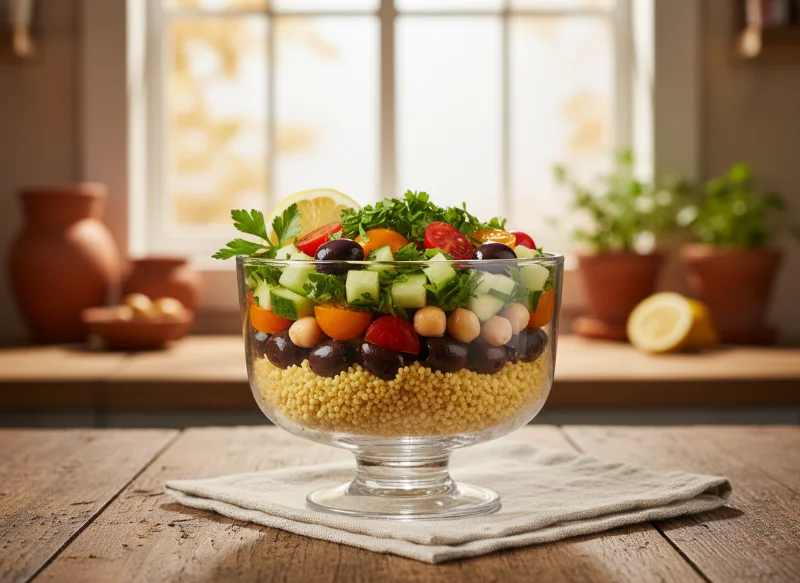
This 10-Minute Mediterranean Couscous Salad is the definitive expression of this trend. It belongs on your Quick Vegan Lunches board because it utilizes the “Citrus-Saturation” method, allowing the couscous to cook in the steam of a hot, zesty broth in under five minutes. By bypassing the stove, you preserve the structural snap of the Mediterranean vegetables and achieve a grain-base that is perfectly infused with the bright, living notes of the spring season.
The Science of the “Flash-Hydration” Technique
How do we achieve a fluffy, restaurant-quality grain salad in ten minutes? It comes down to thermal conductivity and the Acid-Saturation rule. In the modern kitchen, we prioritize “Molecular-Expansion”:
- The Flash-Hydration: Couscous isn’t actually a grain; it’s a tiny pasta made from semolina. Because of its minuscule size, it doesn’t need to be boiled. By pouring boiling vegetable broth over the dry pearls and covering them, we trigger “Rapid-Diffusion”—the liquid penetrates the core of the pasta instantly, causing it to expand and “fluff” without the starch becoming gummy.
- The Citrus-Saturation: We add fresh lemon juice and zest directly to the dry couscous before the hot broth. This ensures that as the pasta expands, it “locks” the citrus lipids inside its structure. This is the Flash-Hydration moment—the flavor isn’t just on the outside; it’s part of the grain itself.
- The Structural Snap: We add the diced cucumbers and peppers after the grains have cooled slightly. This ensures their cell walls remain rigid, providing the essential “crunch” that triggers satiety signals in the brain, letting you know the meal is complete and satisfying.
Why This Salad is a 2026 Nutritional Powerhouse
We focus on “Clean-Fuel Synergy”—the idea that our ingredients should work together to maximize nutrient absorption and long-term vitality.
- High-Density Legume Protein: The addition of chickpeas provides a massive dose of plant-based protein and iron. These support muscle repair and oxygen transport, making this salad an ideal “Performance Fuel” for the workday.
- Bioavailable Vitamin C: The high concentration of fresh lemon juice, cherry tomatoes, and bell peppers significantly increases the bioavailability of the non-heme iron found in the chickpeas and couscous.
- Mineral-Rich “Living” Herbs: Parsley and mint are nutritional titans, offering a massive dose of Vitamin K and antioxidants. These support blood health and provide a natural “bio-shield” during the spring transition.
- Fiber-Rich Metabolic Speed: The combination of whole-wheat couscous and fresh vegetables ensures a slow, steady release of energy into the bloodstream, preventing the “afternoon crash” and keeping you mentally sharp.
Ingredients & Substitutions Guide
- 1 Cup Whole-Wheat Couscous: (Whole-wheat provides more fiber for the “Sustained Energy”).
- 1.5 Cups Boiling Vegetable Broth: The savory “Flash-Hydration” liquid.
- 1 Can (15 oz) Chickpeas: Drained and rinsed thoroughly.
- 1/2 Cucumber: Diced into “Structural Snap” cubes.
- 1 Cup Cherry Tomatoes: Halved for a burst of lycopene.
- 1/2 Cup Fresh Parsley: Roughly chopped for the “Living Layer.”
- 1 Large Lemon: Zested and juiced for the “Citrus-Saturation.”
- 1/4 Cup Kalamata Olives: Halved for a “Brine-Snap.”
- Salt & Black Pepper: To taste.
Step-by-Step Instructions
1. The Citrus-Saturation (Step 1 of 5): Place the dry couscous in a large bowl. Stir in the lemon zest and a pinch of salt. This pre-seasons the grains for the hydration phase.
2. The Flash-Hydration (Step 2 of 5): Pour the boiling vegetable broth over the couscous. Immediately cover the bowl with a lid or a plate. Let it sit undisturbed for 5 minutes.
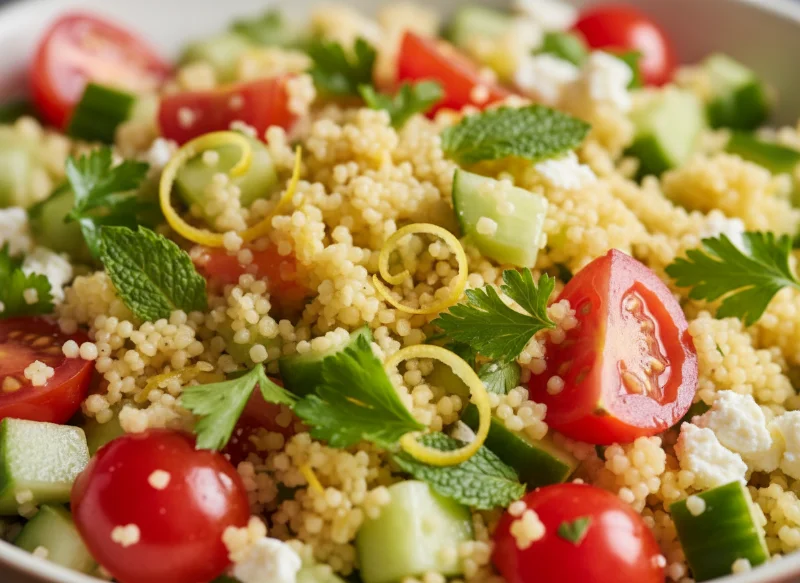
3. The Structural Prep (Step 3 of 5): While the couscous hydrates, dice your cucumber, halve the tomatoes, and chop the parsley. The efficiency of the 10-minute window depends on this parallel processing.
4. The Grain Fluff (Step 4 of 5): Remove the lid from the couscous. Use a fork to fluff the grains, breaking up any clumps. Stir in the lemon juice to complete the “Citrus-Saturation.”
5. The Final Assembly (Step 5 of 5): Fold in the chickpeas, cucumbers, tomatoes, olives, and fresh parsley. Season with a generous amount of freshly cracked black pepper.
6. Serve: Divide into bowls and serve immediately, or pack into jars for the ultimate “Performance Meal Prep.” The flavor will continue to deepen as the “Citrus-Saturation” stabilizes over 24 hours.
Expert Tips for Success
The key to a restaurant-quality finish is Temperature Management. If you add the fresh vegetables to the couscous while it’s still piping hot, they will lose their “Structural Snap” and turn soft. Wait until the grains have reached room temperature for the best texture. For an extra high-performance boost, top this salad with a tablespoon of hemp seeds or a few slices of avocado for a “Luxe-Layer” of healthy fats.