Time: 10 Minutes | Yield: 2 Servings
As we move into the vibrant energy of 2026, the plant-based community is embracing the “Cold-Silk” movement. This culinary shift moves away from stovetop cooking and toward the strategic emulsion of high-quality nut-fats and fermented umami bases. At DailyDishFeed, we believe that your lunch should be a “biological reset”—a meal that provides an immediate flavor explosion while remaining nutritionally restorative. The goal of this season is the “Raw Efficiency,” where we use high-integrity pantry foundations to create restaurant-grade depth in under ten minutes.
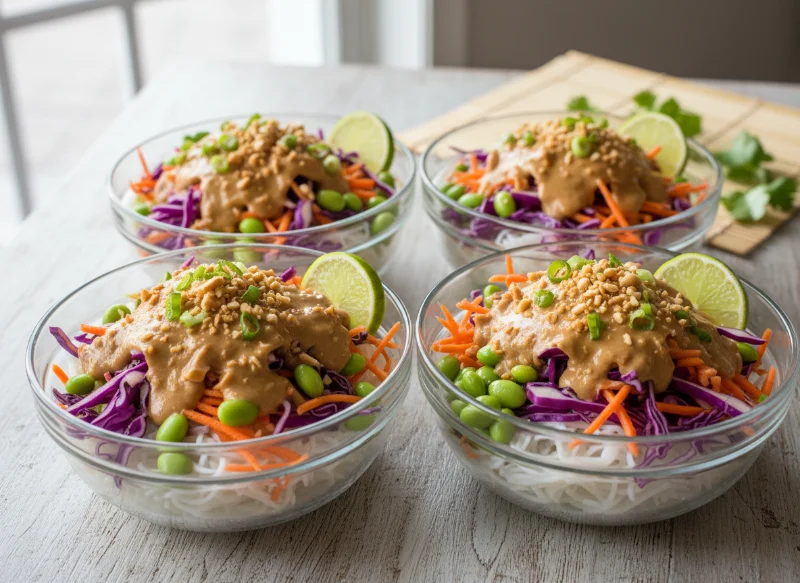
This 10-Minute Thai-Style Peanut Noodle Salad is the definitive expression of this trend. It belongs on your High-Protein Vegan Recipes board because it utilizes the “Mechanical-Tension” method, allowing the thick, savory peanut sauce to “grip” the noodles and vegetables instantly. By bypassing the stove, you preserve the “living” enzyme profile of the fresh ingredients, achieving a level of flavor saturation that is both physically satisfying and mentally sharp.
The Science of the “Cold-Silk” Emulsion
Why does this sauce feel so much more decadent than a standard dressing? It comes down to fat-saturation and the Acid-Stabilization rule. In the 2026 kitchen, we prioritize cold chemistry to ensure total umami saturation:
- The Nut-Fat Suspension: We start with cold-pressed, creamy peanut butter. When whisked with a fermented umami source (soy sauce) and a citric stabilizer (fresh lime juice), it forms a “Cold-Silk” emulsion. The acid in the lime juice prevents the peanut oils from separating, keeping the sauce thick and glossy.
- The Mechanical Tension: Instead of a watery dressing, we aim for a “lacquer” consistency. When this sauce meets the surface of the rice noodles and the fibrous cabbage, it creates mechanical tension—essentially “gripping” the ingredients so the flavor stays on the fork rather than pooling at the bottom of the bowl.
- The Osmotic Lift: The salt in the soy sauce draws a tiny amount of moisture out of the shredded cabbage and carrots. This moisture mingles with the peanut base to create a secondary, lighter emulsion that seasons the vegetables from the inside out in seconds.
Why This Salad is a 2026 Nutritional Powerhouse
We focus on “Satisfying Strength”—the idea that our quick meals should actively support our metabolic health and cognitive focus.
- Dense Plant-Based Protein: Peanut butter and edamame provide a significant dose of plant-based protein and essential amino acids. In 2026, we view these as “performance fats” that support muscle repair and hormone balance.
- Anthocyanin Resilience: The heavy inclusion of purple cabbage provides a massive hit of antioxidants. These compounds support cardiovascular health and provide a “bio-shield” against oxidative stress during high-intensity days.
- Enzymatic Vitality: Because this recipe is zero-cook, all the enzymes in the fresh vegetables and raw lime juice remain fully intact. These “living” components assist in digestion, ensuring your body absorbs the maximum amount of nutrients with minimal effort.
Ingredients & Substitutions Guide
- 4 oz (115g) Rice Noodles: (Use thin “vermicelli” style; they only require a 5-minute soak in hot water).
- 1 Cup Shredded Purple Cabbage: For that essential 2026 crunch.
- 1/2 Cup Grated Carrots: For natural sweetness and color.
- 1/2 Cup Edamame: Thawed (for a high-protein “Stitch”).
- 2 Green Onions: Thinly sliced.
For the 2-Minute “Cold-Silk” Sauce:
- 1/4 Cup Creamy Peanut Butter: The rich, fatty base.
- 1 tbsp Soy Sauce or Tamari: For fermented umami.
- 1 tbsp Lime Juice: Freshly squeezed (the “Acid-Flash”).
- 1 tsp Maple Syrup: To balance the savory notes.
- 1 tsp Ginger: Freshly grated for a zesty lift.
- 1-2 tbsp Warm Water: To reach the perfect “Silk” consistency.
Step-by-Step Instructions
1. The Noodle Reset (Step 1 of 5): Place your rice noodles in a bowl and cover with very hot (not boiling) water. Let them soak for 5 minutes. This preserves their “Structural Snap” and prevents them from becoming mushy.
2. The Cold-Silk Emulsion (Step 2 of 5): In a small jar, whisk together the peanut butter, soy sauce, lime juice, maple syrup, and grated ginger. Add warm water one tablespoon at a time until the sauce is thick and glossy—like a heavy cream.
3. The Component Shred (Step 3 of 5): Shred your cabbage and carrots finely. In 2026, we value the “Micro-Shred” as it increases the surface area for the sauce to “grip.”
4. The High-Protein Stitch (Step 4 of 5): Drain the noodles and rinse with cold water to stop the cooking process. In a large bowl, combine the noodles, edamame, cabbage, and carrots.
5. The Mechanical-Tension Toss (Step 5 of 5): Pour the “Cold-Silk” sauce over the bowl. Toss vigorously for 45 seconds using tongs. You want to see the sauce fully lacquer the noodles until they are opaque and glistening.
6. Serve: Divide into bowls. Top with sliced green onions and a heavy shower of crushed peanuts. Serve immediately while the salad is cold and the “Silk” is at its peak.
Expert Tips for Success
The key to a restaurant-quality finish is Temperature Contrast. Ensure your vegetables are ice-cold from the fridge; the contrast between the room-temperature noodles and the cold cabbage is a hallmark of high-vibrancy eating. If the sauce feels too thick, don’t add more oil—add a teaspoon of lime juice to “lift” the fats. For an extra metabolic boost, add a teaspoon of chili oil to the sauce base.