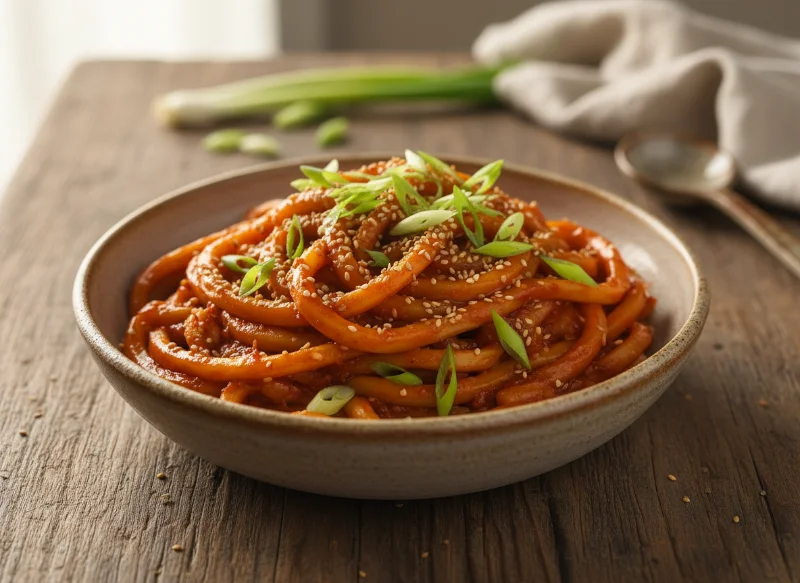
Time: 15 Minutes | Yield: 2 Servings
As we move into the vibrant energy of 2026, the plant-based community is embracing the “Fermented-Heat” movement. This culinary shift moves away from simple heat and toward the deep, multidimensional umami found in aged pepper pastes like Gochujang. At DailyDishFeed, we believe that your weeknight dinner should be a “sensory reset”—a meal that provides an immediate flavor explosion while remaining nutritionally restorative. The goal of this season is the “Umami Efficiency,” where we use fermented foundations to create restaurant-grade depth in the time it takes to boil water.
This 15-Minute Spicy Gochujang Noodles recipe is the definitive expression of this trend. It belongs on your 30-Minute Vegan Dinners board because it utilizes the “Starch-Grip” method, allowing the thick, savory sauce to bond with the noodles instantly. By bypassing long simmer times, you preserve the bright, zesty notes of the ginger and garlic, achieving a level of flavor saturation that is both physically satisfying and mentally revitalizing.
The Science of the “Starch-Grip” Technique
The secret to a world-class noodle dish lies in the interaction between the noodle’s surface and the sauce emulsion. In the 2026 kitchen, we utilize Starch-Grip chemistry to ensure total saturation:
- The Thermal Bloom: We start by “blooming” the garlic and Gochujang paste in hot sesame oil. This process activates the fat-soluble flavor compounds in the fermented peppers, creating a concentrated base that provides a much deeper umami than simply stirring the paste into a liquid.
- The Starch Integration: We transfer the noodles directly from the boiling water into the sauce skillet. The residual “liquid gold” (starchy pasta water) clinging to the noodles acts as a natural emulsifier. This creates a mechanical bond between the Gochujang fats and the noodle surface.
- The Glossy Reduction: As the noodles toss in the hot pan, the starch thickens the sauce into a heavy, velvety lacquer. This is the “Starch-Grip” in action—a sauce that stays on the noodles rather than pooling at the bottom of the bowl.
Why These Noodles are a 2026 Nutritional Powerhouse
We focus on “Functional Umami”—the idea that our comfort meals should actively support our metabolic health and gut resilience.
- Fermented Gut Support: Gochujang is a fermented paste, meaning it is rich in beneficial enzymes that support digestive health. In 2026, we view fermented ingredients as essential tools for maintaining a healthy microbiome during the spring transition.
- Metabolic Heat: The capsaicin in the red peppers provides a natural thermogenic lift. It stimulates circulation and aids in the efficient metabolism of the carbohydrates in the noodles, providing a clean energy boost without the “heavy” feeling of traditional comfort food.
- Garlic and Ginger Immunity: By incorporating significant amounts of fresh aromatics, we provide a “Living Layer” of antimicrobial support. These ingredients assist in immune resilience and provide a natural anti-inflammatory benefit.
Ingredients & Substitutions Guide
- 8 oz (225g) Thick Noodles: (Udon, Ramen, or even Fettuccine work perfectly).
- 2 tbsp Gochujang Paste: (Ensure it is a vegan-certified brand).
- 1 tbsp Toasted Sesame Oil: For the “Thermal Bloom” base.
- 3 Cloves Garlic: Minced finely.
- 1 tsp Fresh Ginger: Grated for a zesty lift.
- 1 tbsp Soy Sauce: For added savory depth.
- 1 tsp Maple Syrup: To balance the heat and aid the “Starch-Grip” glaze.
- 2 Green Onions: Thinly sliced.
- 1 tbsp Toasted Sesame Seeds: For the “Crunch Layer” finish.
Step-by-Step Instructions
1. The Starch Foundation (Step 1 of 5): Bring a pot of water to a boil. Add your noodles and cook for 1 minute less than the package instructions. This ensures they maintain their structural integrity during the “Starch-Grip” phase.
2. The Thermal Bloom (Step 2 of 5): While the noodles cook, heat the sesame oil in a large skillet over medium-high heat. Add the minced garlic, ginger, and Gochujang paste. Sauté for 60 seconds until the paste is bubbling and fragrant.
3. The Umami Base (Step 3 of 5): Whisk in the soy sauce and maple syrup. The mixture will become a thick, dark red aromatic base.
4. The Starch-Grip Integration (Step 4 of 5): Using tongs, transfer the noodles directly from the water into the skillet. Add 2 tablespoons of the starchy noodle water. Toss vigorously for 2 minutes over high heat. The sauce will reduce and “grip” the noodles, forming a glossy, thick lacquer.
5. The Final Aromatic Layer (Step 5 of 5): Turn off the heat. Toss in half of the sliced green onions. The residual heat will soften them slightly without destroying their fresh enzyme profile.
6. Serve: Divide into bowls. Top with the remaining green onions and a heavy shower of toasted sesame seeds. Serve immediately while the noodles are at their peak glossiness.
Expert Tips for Success
The key to a restaurant-quality finish is Temperature Management. If the sauce feels too thick or “gummy,” add one extra tablespoon of the hot noodle water to restore the silkiness. Always toast your sesame seeds for 30 seconds in a dry pan before serving; this releases their essential oils and provides a much deeper “Sesame-Snap.” For an extra high-protein hit, serve these noodles with a side of seared tofu or edamame.


