Time: 15 Minutes | Yield: 2-3 Servings
As we transition into the high-energy months of early 2026, the plant-based community is pivoting toward “Chlorophyll-Lock” cooking. This movement is a rebellion against the heavy, over-processed comfort foods of winter, focusing instead on the “Living Color” of spring produce. At DailyDishFeed, we believe that your dinner should be a “biological reset”—a meal that provides a clean energy lift while requiring minimal recovery time in the kitchen. The goal of this season is “Efficiency Saturation,” where we use the natural starches of the pasta to build a restaurant-grade emulsion in a single pot.
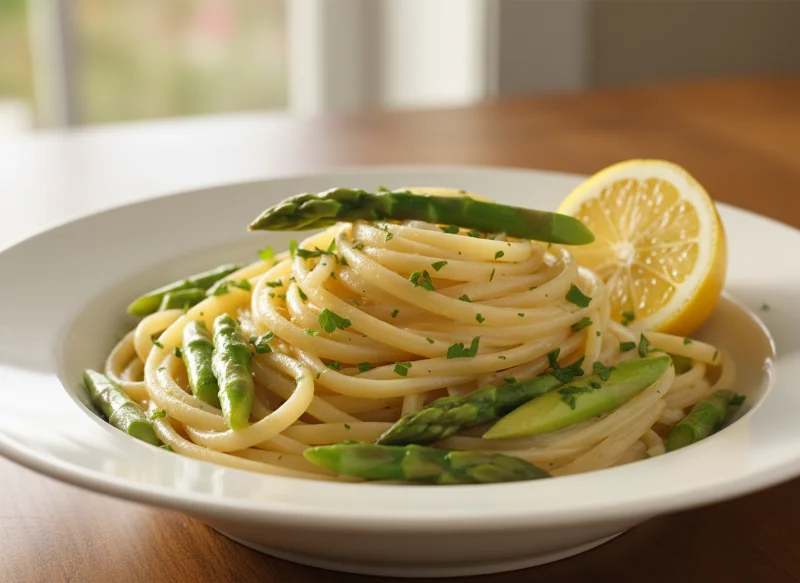
This 15-Minute One-Pot Lemon Asparagus Pasta is the definitive expression of this trend. It belongs on your One-Pot & Sheet Pan Dinners board because it eliminates the “dull” texture of boiled vegetables. By utilizing the “Direct-Emulsion” method, you can transform the starchy pasta water into a silky, lemon-scented lacquer that clings to every strand, ensuring a gourmet experience in the time it takes to set the table.
The Science of the “Chlorophyll-Lock” Technique
Why does this asparagus stay so vibrantly green while remaining tender-crisp? It comes down to cellular management and the Flash-Saturation rule. In the 2026 kitchen, we prioritize the “Thermal-Shield” technique:
- The Starch Suspension: By cooking the pasta in a measured amount of liquid, we concentrate the amylopectin starches. This “liquid gold” becomes the structural foundation of our sauce, allowing us to achieve a creamy mouthfeel without the use of heavy plant-based milks or fats.
- The Chlorophyll-Lock: We add the asparagus to the pot during the final 3 minutes of cooking. This “Flash-Blanch” ensures that the internal moisture of the vegetable is sealed in, preventing the chlorophyll from degrading. The result is a vibrant, neon-green color and a “Structural Snap” that satisfies the brain’s need for varied textures.
- The Acid-Flash Reset: We finish the dish with fresh lemon juice and cold-pressed olive oil after the heat is turned off. This prevents the citric acid from turning the greens dull and ensures the essential oils of the lemon remain fully intact for a high-vibrancy finish.
Why This Pasta is a 2026 Nutritional Powerhouse
We focus on “Clean-Fuel Synergy”—the idea that our ingredients should work together to maximize nutrient absorption and energy levels.
- Alkalizing Asparagus: Asparagus is a nutritional titan, rich in Vitamin K, Folate, and prebiotic fiber. It supports kidney health and fluid balance, making it an essential part of the “Spring Reset” diet.
- Vitamin C and Iron Absorption: The high concentration of Vitamin C in the fresh lemon juice significantly increases the bioavailability of the plant-based iron found in the pasta and asparagus. This synergy supports oxygen transport and reduces fatigue.
- Antimicrobial Garlic Aromatic: By using fresh, minced garlic that is lightly “bloomed” in the pot, we provide a dose of allicin. This compound supports immune resilience and provides a natural anti-inflammatory benefit.
Ingredients & Substitutions Guide
- 8 oz (225g) Linguine or Fettuccine: (Long noodles work best for the “Direct-Emulsion” lacquer).
- 1 Bunch Fresh Asparagus: Trimmed and cut into 2-inch pieces.
- 3 Cloves Garlic: Minced finely for maximum flavor release.
- 3 Cups Vegetable Broth: To provide the savory liquid base.
- 1 Large Lemon: Both the juice and the zest.
- 2 tbsp Extra Virgin Olive Oil: Cold-pressed for the “Silk” finish.
- 1/4 Cup Fresh Parsley: Roughly chopped for a “Living Layer” finish.
- Salt & Black Pepper: To taste.
Step-by-Step Instructions
1. The One-Pot Build (Step 1 of 5): In a large skillet or pot, combine the dry linguine, minced garlic, and the vegetable broth. Ensure the noodles are mostly submerged.
2. The Starch Saturation (Step 2 of 5): Bring the liquid to a boil over high heat. Reduce the heat to medium-high and simmer for about 8 minutes, tossing the noodles frequently with tongs. This motion releases the starches needed for the emulsion.
3. The Chlorophyll-Lock (Step 3 of 5): When the pasta is nearly al dente and about 1/2 cup of liquid remains, toss in the asparagus pieces. Stir vigorously for 3 minutes. The liquid will continue to reduce and thicken into a glossy sauce.
4. The Final Emulsion (Step 4 of 5): Turn off the heat. This is the “Aromatic Transition.” Stir in the olive oil, lemon zest, and lemon juice. The sauce will instantly transform into a thick, translucent lacquer that “grips” the noodles.
5. The Living Layer Finish (Step 5 of 5): Fold in the fresh parsley and season generously with sea salt and freshly cracked black pepper.
6. Serve: Divide into bowls and serve immediately. The temperature contrast between the hot, silky pasta and the tender-crisp asparagus is at its peak right now!
Expert Tips for Success
The key to a restaurant-quality one-pot pasta is Moisture Management. If your liquid evaporates too fast before the pasta is tender, add a 1/4 cup of warm water to keep the emulsion moving. Always finish with fresh lemon after the pan is removed from the heat; this is the secret to that bright, 2026 signature flavor. For an extra high-protein hit, top this dish with a tablespoon of toasted pine nuts or hemp seeds.