Time: 10 Minutes | Yield: 2 Flatbreads
The modern mid-day meal is undergoing a quiet revolution. As our schedules demand higher cognitive performance and our palates seek more vibrant, high-integrity experiences, we are moving away from the heavy, processed “convenience” foods of the past. Instead, we are embracing a philosophy of “Functional Speed”—building meals that use the raw, enzymatic power of fresh plants and the starchy density of legumes to provide a clean energy lift. At the center of this movement is the synergy between high-protein white beans and herb-dense emulsions like pesto.
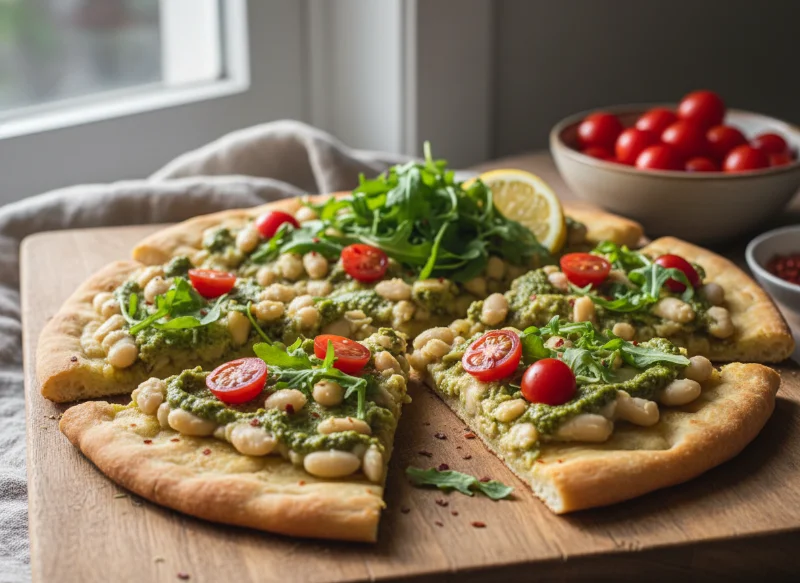
This 10-Minute White Bean & Pesto Flatbread is the definitive expression of this high-vibrancy trend. It belongs on your High-Protein Vegan Recipes board because it solves the “lunch slump” by providing a meal that is physically restorative and mentally sharp. By utilizing specific textural techniques and a strategic “Flavor-Lock” assembly, you can transform humble pantry staples into a sophisticated, restaurant-quality meal that keeps you fueled through even the most demanding afternoons.
The Science of the “Protein-Pesto Synthesis”
Why does the combination of white beans and pesto feel so much more satisfying than a standard vegetable wrap? It comes down to the “Protein-Pesto Synthesis”—a specific interaction between fat-soluble aromatics and legume starches.
The foundation of this flatbread is the “Mechanical-Creamed” bean base. In our kitchen, we prioritize the preservation of texture. By mashing only a portion of the cannellini beans, we create a creamy, starchy “glue” that binds the whole beans to the flatbread. This starch acts as a vehicle for the pesto. Because most pestos are oil-based, they contain fat-soluble essential oils from basil and garlic. When swirled into the bean base, these oils are trapped by the starch, ensuring that the flavor remains concentrated on the palate rather than being lost in the bread. This isn’t just a topping; it’s a concentrated delivery system for antioxidants and plant-based protein.
Mastering the “Flash-Char” Technique
The structural integrity of a flatbread is just as important as its flavor profile. A common mistake in quick plant-based meals is a soggy or limp base. To avoid this, we utilize the “Flash-Char” method. Even when using store-bought flatbreads or pita, a 60-second sear in a dry, high-heat skillet or a quick pass under a broiler creates what we call the “Structural Snap.”
This rapid dehydration of the bread’s surface creates a rigid barrier. When you apply the moist bean mash and pesto, the “Flash-Char” prevents the moisture from migrating into the bread’s core. This ensures that every bite maintains a satisfying crunch that contrasts perfectly with the creamy topping. This mechanical contrast is essential for satiety—the physical act of chewing varied textures signals to the brain that a meal is substantial and complete.
Why This Flatbread is a Nutritional Powerhouse
We focus on “Clean-Fuel Synergy”—the idea that our ingredients should work together to maximize nutrient absorption and long-term vitality. This flatbread is a nutritional powerhouse for several reasons:
- Complete Plant-Based Protein: Cannellini beans are a high-density source of protein and iron. When paired with the complex carbohydrates of a high-quality flatbread, they provide the essential building blocks necessary for muscle repair and cognitive focus.
- Bioavailable Healthy Fats: By using a pesto made with extra virgin olive oil and pine nuts (or walnuts), we provide the body with monounsaturated fats. These fats not only support heart health but also significantly increase the bioavailability of the vitamins found in the fresh herbs and greens.
- Enzymatic Freshness: By topping the flatbread with raw arugula, cherry tomatoes, and a squeeze of fresh lemon, you are introducing “living” enzymes to the meal. These components assist in digestion and ensure that the Vitamin C stays fully intact, which in turn aids in the absorption of the iron found in the white beans.
- Fiber-Dense Satiety: The combination of legumes and fresh vegetables ensures a slow, steady release of glucose into the bloodstream. This prevents the “insulin spike” and subsequent afternoon fatigue, keeping your brain sharp and your body energized.
Ingredients & Substitutions Guide
- 2 Vegan Flatbreads or Large Pitas: (Whole-grain or sourdough options provide the best “Structural Snap”).
- 1 Can (15 oz) Cannellini Beans: Drained and rinsed thoroughly. (Great Northern beans also work beautifully).
- 1/4 Cup High-Quality Vegan Pesto: (Look for an oil-based version for the best “Flavor-Lock”).
- 1/2 Cup Cherry Tomatoes: Halved for a “Hydrating Layer.”
- 1 Cup Fresh Arugula: For a peppery, enzymatic finish.
- 1 tbsp Fresh Lemon Juice: For the essential “Acid-Flash” reset.
- 1/2 tsp Red Pepper Flakes: For a subtle, metabolic heat.
- Salt & Black Pepper: To taste.
Step-by-Step Instructions
1. The Structural Snap (Step 1 of 5): Place your flatbreads in a dry skillet over medium-high heat. Toast for 1 minute per side until they are warm, slightly charred, and rigid. This creates the moisture barrier needed for the toppings.
2. The Mechanical-Mash (Step 2 of 5): In a small bowl, combine the rinsed white beans with a pinch of salt and a teaspoon of lemon juice. Use a fork to mash about 60% of the beans into a chunky paste, leaving the rest whole for textural contrast.
3. The Protein-Pesto Synthesis (Step 3 of 5): Spread the bean mixture evenly across the charred flatbreads. Spoon the vegan pesto over the beans and use the back of the spoon to swirl it into the mash. This “locks” the aromatic oils into the starch.
4. The Hydrating Layer (Step 4 of 5): Arrange the halved cherry tomatoes over the pesto-bean base. Press them down slightly so they adhere to the “glue” of the mashed beans.
5. The Final Living Layer (Step 5 of 5): In a small bowl, toss the fresh arugula with the remaining lemon juice. Pile the dressed arugula on top of the flatbreads.
6. Serve: Finish with a sprinkle of red pepper flakes and freshly cracked black pepper. Slice into triangles and serve immediately. The contrast of the warm, charred bread and the cool, zesty toppings is at its peak!
Expert Tips for Success
The key to a restaurant-quality flatbread is “Acid Balance.” If the beans feel a bit heavy, don’t be afraid to add an extra squeeze of lemon juice right before serving. This “Acid-Flash” cuts through the starchy density and makes the beans feel lighter. If you are prepping this for a lunch on the go, keep the arugula and tomatoes in a separate container and assemble right before eating to maintain the “Structural Snap” of the bread.
For an extra nutritional boost, add a sprinkle of hemp seeds or a few toasted pine nuts to each flatbread. This recipe is a versatile, high-performance canvas that proves you can have a gourmet, healthy lunch on the table in just ten minutes. By understanding the science of the “Protein-Pesto Synthesis,” you can reclaim your lunch hour and fuel your body with a plant-based masterpiece.