Time: 10 Minutes | Yield: 2 Servings
The modern kitchen is undergoing a quiet revolution where simplicity and nutrient density are the primary objectives. We have moved past the era where a “fast” meal was synonymous with a “processed” one. Instead, we are embracing the power of the pantry, specifically the versatility of legumes. This shift, which we call the “Legume-Luxe” movement, focuses on the high-integrity protein found in white beans and pairs it with the bright, enzymatic power of Mediterranean aromatics. At DailyDishFeed, we believe that your mid-day meal should be a “functional reset”—a collection of flavors that provide immediate physical energy and long-term cognitive focus.
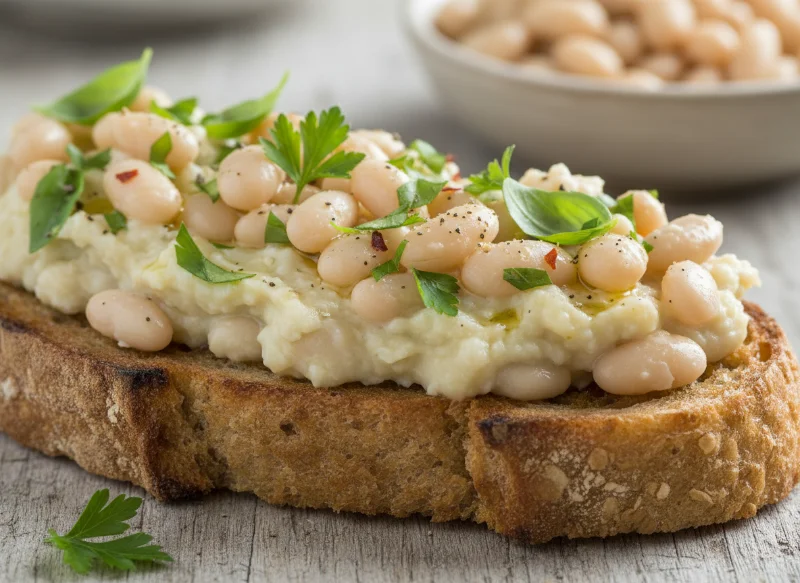
This 10-Minute Mediterranean White Bean Toast is the definitive expression of this philosophy. It belongs on your High-Protein Vegan Recipes board because it challenges the dominance of avocado toast by providing a more balanced, protein-rich foundation. By utilizing the “Mechanical-Creaming” technique, you can transform a simple can of beans into a velvety, restaurant-grade spread in the time it takes to toast a slice of bread. This is high-vibrancy eating at its most efficient.
The Science of “Mechanical-Creaming”
The secret to a world-class bean toast lies in the texture of the mash. If the beans are left entirely whole, they often feel dry and disconnected from the bread; if they are blended into a smooth hummus, they lose the rustic charm that defines a good tartine. In our kitchen, we utilize “Mechanical-Creaming” to achieve the perfect middle ground.
This technique involves a strategic “partial breakdown” of the bean. By using a fork to mash roughly 60% of the beans while keeping the rest whole, you release the internal starches. These starches, when combined with a small amount of extra virgin olive oil and lemon juice, create a natural emulsion. This “cream” binds the whole beans together, creating a luxurious mouthfeel that provides enough structural integrity to stay on the bread while still offering a satisfying “bite.” This mechanical texture is essential because it engages the palate and triggers satiety signals more effectively than a smooth puree.
The Aromatic Saturation Process
Because this recipe requires zero cooking for the beans themselves, we rely on the chemistry of “Aromatic Saturation” to build deep flavor. Instead of simply topping the toast with herbs, we fold the aromatics directly into the “Mechanical-Cream.” By mixing the garlic, lemon zest, and fresh herbs into the beans before they hit the bread, we allow the lemon’s citric acid to act as a flavor carrier.
This acid-led emulsion penetrates the starchy core of the white beans, “waking up” their mild, nutty profile. The result is a savory, zesty spread that feels bright and multi-dimensional. We use cold-pressed olive oil as a finisher, which adds a layer of healthy, monounsaturated fats that not only support heart health but also help the body absorb the fat-soluble vitamins found in the fresh parsley and lemon.
Why This Toast is a High-Protein Powerhouse
We focus on “Amino-Architecture”—the idea that our plant-based protein sources should be as bioavailable and satisfying as possible. This toast is a nutritional titan for several reasons. White beans, such as Cannellini or Great Northern, are an incredible source of plant-based protein and iron. They provide the essential building blocks for muscle repair and cognitive endurance. When paired with a slice of high-quality, toasted sourdough, you are getting a complex carbohydrate source that ensures a slow, steady release of energy throughout the afternoon.
Beyond the protein, this dish is a masterclass in mineral density. White beans are rich in magnesium and potassium, which are critical for nerve function and fluid balance. The addition of fresh garlic provides a hit of allicin, an antimicrobial compound that supports immune resilience. By incorporating a “Living Layer” of fresh herbs and raw lemon, you are ensuring that the enzymes and Vitamin C stay fully intact, aiding in digestion and iron absorption.
Ingredients & Substitutions Guide
- 1 Can (15 oz) Cannellini or White Kidney Beans: Drained and rinsed thoroughly.
- 2 Thick Slices Sourdough Bread: (Or gluten-free alternative).
- 1 tbsp Extra Virgin Olive Oil: Cold-pressed is best for the “Legume-Luxe” finish.
- 1 tbsp Fresh Lemon Juice & 1 tsp Zest: For the “Acid-Flash” reset.
- 1 Clove Garlic: Grated or finely minced.
- 1/4 Cup Fresh Parsley: Roughly chopped.
- 1/2 tsp Red Pepper Flakes: For a subtle, metabolic heat.
- Salt & Black Pepper: To taste.
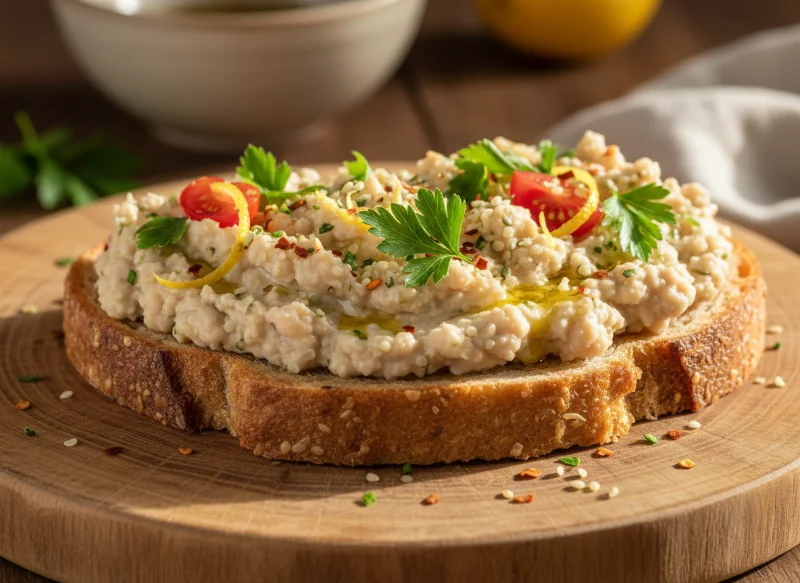
- Optional Garnish: Halved cherry tomatoes or a sprinkle of hemp seeds.
Step-by-Step Instructions
1. The Mechanical-Mash: Place your rinsed white beans in a medium bowl. Use a fork to mash about 60% of the beans into a creamy paste. Leave the rest whole for that essential textural contrast.
2. The Aromatic Saturation: Add the minced garlic, lemon juice, lemon zest, and half of the olive oil to the beans. Stir vigorously for 30 seconds. The mixture should become slightly glossy and thick.
3. The Herb Fold: Fold in the fresh parsley and red pepper flakes. Season generously with sea salt and freshly cracked black pepper. Let the mixture sit for 2 minutes while you toast your bread; this allows the “Aromatic Saturation” to complete.
4. The Structural Toast: Toast your sourdough until it is deeply golden and has a rigid, charred exterior. This provides the “Structural Snap” needed to support the creamy bean topping without becoming soggy.
5. The Assembly: Divide the white bean mixture between the two slices of toast. Spread it evenly to the edges.
6. The Living Layer Finish: Top with any optional garnishes like cherry tomatoes or hemp seeds. Drizzle the remaining olive oil over the top and add a final pinch of black pepper. Serve immediately while the toast is hot and the beans are room temperature for the ultimate temperature play.
Expert Tips for Success
The key to a restaurant-quality bean toast is the “Acid Balance.” If the beans feel a bit heavy, don’t be afraid to add an extra squeeze of lemon juice right before serving. This “Acid-Flash” cuts through the starchy density and makes the beans feel lighter. If you are prepping this for a quick lunch at work, you can mash the beans in advance and store them in an airtight container for up to 3 days. Simply toast your bread and assemble when you’re ready to eat to maintain the “Structural Snap.”
For an extra nutritional boost, you can top this toast with a handful of microgreens or a spoonful of sauerkraut for a probiotic hit. This recipe is a versatile, high-performance canvas that proves you can have a gourmet, high-protein meal on the table in less time than it takes to order a sandwich. By understanding the science of “Mechanical-Creaming” and “Aromatic Saturation,” you can reclaim your lunch hour and fuel your body with a plant-based masterpiece.